



November 20, 2024
Connection and Belonging: The Impact of Inclusive Digital Spaces
Discover how inclusive digital spaces foster connection and belonging in today’s online world.
KONEKT
digital transformation
accessibility
inclusion
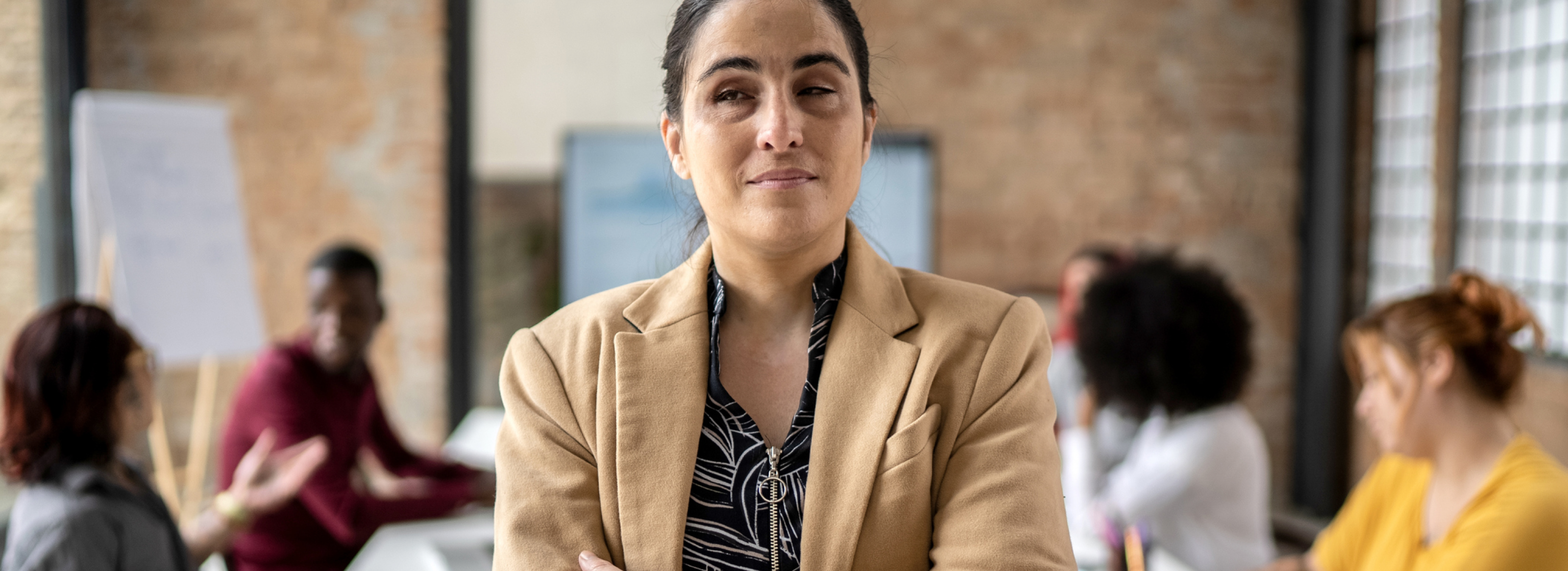
A blind woman in a meeting room, with colleagues behind her.
Introduction
We’ve already written about the importance of digital accessibility, but what is the emotional impact on people, and why does it matter?
For millions of people with disabilities, digital spaces provide essential opportunities for connection, participation, and community. Through social media platforms, virtual events and community forums, online environments help create a sense of belonging while reducing the isolation that many individuals with disabilities experience in their daily lives.
Following the success of our Accessibility Guide, this blog takes a deeper look at how we create inclusive digital spaces that help those with health conditions and disabilities feel more connected to their communities.
An older man in a wheelchair engages in conversation with an older woman, both using tablets for interaction.
The Power of Connection
We all know that social media has revolutionised the way we connect to others.
For people with disabilities, these platforms are a lifeline to engaging with others and building connection. In just the US, 56% of people with disabilities use social media, compared to 74% of those without disabilities.
When social media has accessibility built-in, everyone can participate fully, whether by sharing content, keeping up to date, following conversations, or engaging in community discussions.
For instance, features like alternative text (alt text) for images enable people who are blind or visually impaired to understand the visual content being shared. Alt text allows screen readers to describe images, making the experience more inclusive. Similarly, captioning in videos ensures that people with hearing impairments can engage with video content.
Easy-to-navigate interfaces are essential, as they help people with disabilities interact without barriers. Coupled with accessibility features, this allows everyone to represent themselves, share their stories and connect with others.
To support this sense of connection and belonging, organisations have a responsibility to ensure that their content - including campaigns, updates and resources, are available for everyone to engage with.
A mother and her daughter with Down's syndrome sit at a table, using a laptop to take a photo together.
Virtual Events: Redefining Inclusion
Virtual events have become an essential part of our lives, particularly in the wake of the COVID-19 pandemic. During lockdown, accessible online work was necessary for many of us, but particularly for disabled people. A study by the Office for National Statistics (ONS) found that 57% of disabled people in the UK reported using video conferencing tools during the pandemic, compared to 35% of adults who do not have a disability.
Webinars, conferences, and live-streamed entertainment events now offer new avenues for participation for people with disabilities, who may find it challenging to attend in-person gatherings due to physical, sensory, or cognitive barriers.
Accessible virtual events are a game-changer for inclusivity. Features like real-time captions and sign language interpretation enable people with hearing impairments to follow along with the event, while accessible platforms and tools ensure that everyone can participate fully. For example, screen reader compatibility and keyboard-friendly navigation enable people with vision impairments or motor disabilities to interact with the platforms just as easily as anyone else.
If your organisation hosts virtual events, making sure that these experiences are accessible to everyone increases your reach. It encourages participation by creating an inclusive environment that welcomes all attendees.
Creating Safe Spaces
Community and interaction with others is essential for our mental health, and in the UK, 70% of disabled people say that online communities provide them with a sense of belonging.
Online spaces such as community forums and groups are more than just a place to chat, they provide safe spaces for people with disabilities to share their experiences, seek advice and support each other.
For many people, online support groups are essential, particularly those who may feel isolated in their physical environments. These digital communities can be especially beneficial for individuals who have limited access to in-person social interaction due to mobility challenges, geographical location, or other constraints.
Accessible design elements play a large role in making sure that these forums and groups are welcoming to all. Intuitive navigation, compatibility with screen readers, and simple, easy-to-use interfaces ensure that people with disabilities can fully contribute to discussions. These platforms offer individuals a voice, a place to be heard, and a chance to participate in meaningful dialogue.
Organisations can make the most of these online spaces by creating accessible platforms where their customers and those they support can connect, find resources, and build relationships with others.
Young man with dwarfism and his mother dancing while recording a social media video at home
Reducing Social Isolation
Despite the advancements which can encourage connection, many people still feel isolated. For people with disabilities, research suggests this is more prevalent, with 49% of disabled people in the UK report feeling excluded from society and daily life.
For people with disabilities, some of whom already face barriers to social interaction, accessible digital spaces provide the “front door” to activities that may otherwise not be an option for them.
Inclusive digital platforms, such as social media and virtual events, offer the opportunity for people with disabilities to participate in community life, engage with peers, and can reduce feelings of loneliness. For example, someone with mobility impairments may find it challenging to leave their home, but through online platforms, they can still interact with friends and family, attend events, and feel part of a community.
For organisations, not only is accessibility a matter of compliance, but it also goes one step further by supporting your customers and service users. By making small changes, you can help to reduce isolation and facilitate stronger connections among communities.
Conclusion
With accessible digital spaces, we can ensure that everyone, regardless of ability, can find connection, belonging, and community online.
As we continue to move towards a more digital society, it’s essential that we prioritise accessibility to ensure that no one is left behind. Charities, businesses, and developers all have a part to play in creating digital spaces that are welcoming to all.
To learn more about how digital accessibility can work for your charity, take a look at the Accessibility Guide or perform an Accessibility Self-Assessment to check how inclusive your digital platforms are.
Access Your Accessibility Status Today
At Konekt, we believe that employing a user-centred strategy, such as design thinking or user-centred design (UCD), can significantly enhance your products and services. Curious about how well your company is adopting these strategies? Take our self-assessment survey to evaluate your current practices, receive a score that highlights your strengths and areas for improvement, and start creating more user-focused solutions for greater success.
We would love to hear your feedback on our Accessibility and Inclusion Guide!
We value your feedback to help us improve our content and ensure it meets your needs. Your insights allow us to create more relevant, informative, and accessible articles that benefit our entire community.
1 / 3
The article effectively highlighted the importance of Accessibility.
- Not at all
- A little
- Somewhat
- Quite a bit
- Very much