



June 17, 2024
Design Thinking Guide
THIN MARTIAN
ux, ui and digital design
What Is Design Thinking?
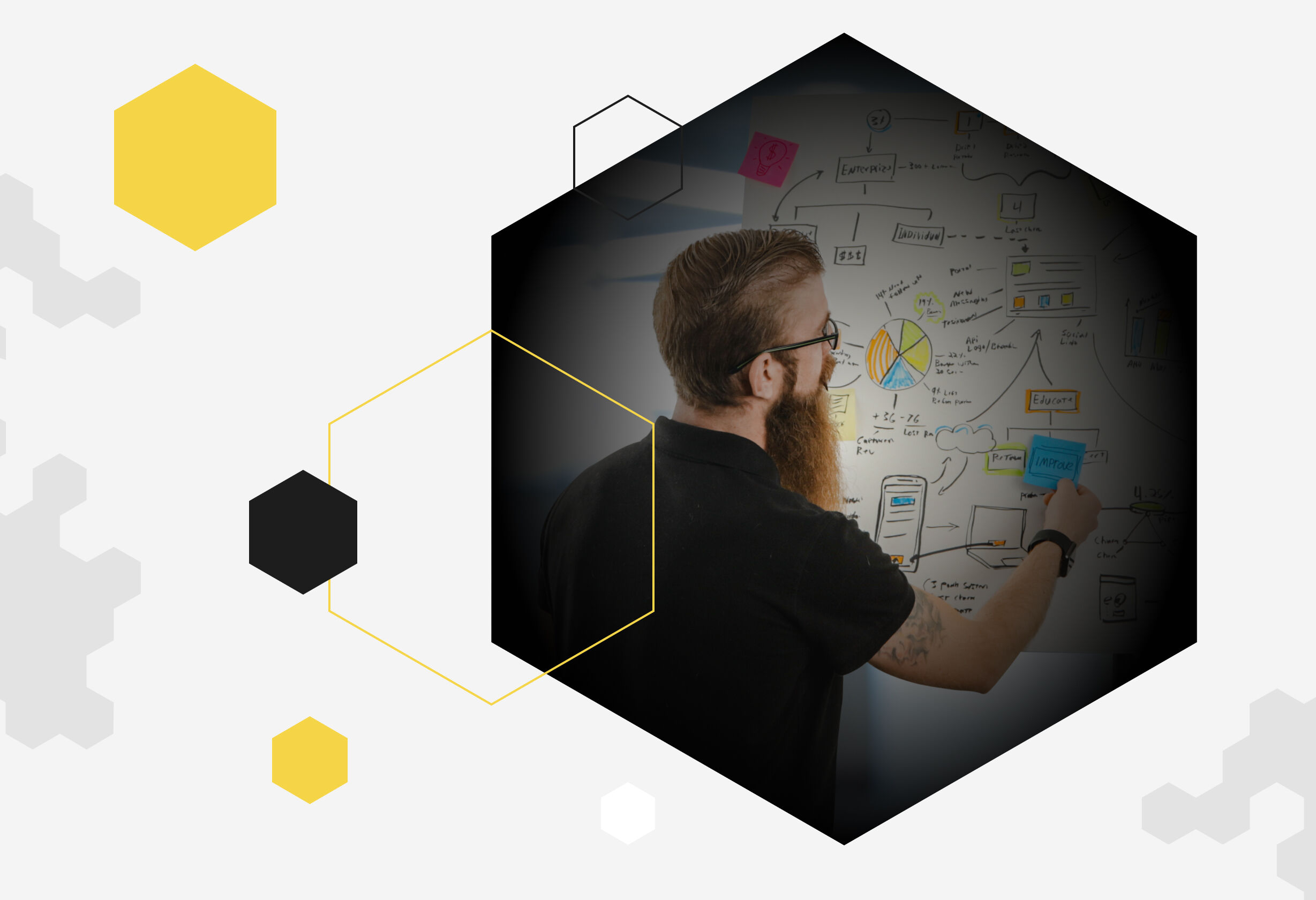
Design thinking is an ideology supported by a process in which you understand your users, challenge assumptions, redefine a problem and create innovative solutions that you can prototype and test. The overall goal is to solve a problem in a creative and user centric way. As a non-linear, iterative process, design thinking has 5 stages:
- Empathize - understand the problem of the user
- Define - Form a problem statement
- Ideate - Generate creative solutions to the problem
- Prototype - Build a tangible representation of the solution
- Test - Validate the solution with your target audience
What is the purpose of design thinking?
The Purpose of design thinking is to approach problem-solving and design challenges with an ideology focused on the user. This results in products designed for ease of use rather than expecting users to adapt to said products. With human-centered design, and an empathic approach, we gain an intimate understanding of the users and can offer solutions that satisfy user needs. By adopting this approach and embedding it into organizational culture, we can foster creativity, collaboration, innovation and inherently success.
Benefits of design thinking
By using design thinking, we can solve complex problems and find desirable practical solutions. With user empathy at the heart, the process ensures that our solutions are user-centric and focused on a clear narrative that challenges assumptions. Key benefits include:
Enhance innovation - Design thinking minimizes the uncertainty and risk of innovation by engaging users through prototypes to learn, test and refine concepts. The product/service solution is based on the user insights gained from real testing, and not just data (historical, market research etc.) Additionally, the framework brings diverse voices into the process, and this is known to improve ideation and solutions.
Improve customer acquisition & loyalty - The design thinking process ensures that we define who the users are in detail. With empathy as a core feature of the framework, problem definition and subsequent solutions are user centric. This level of deeper user engagement equates to familiarity and confidence in the product/service.
Improve ROI - Businesses have different metrics to track return on investment but generally to realize this we have three key factors.
- User conversion and adoption - When companies build products without design thinking, they tend to build based on their ideas and understanding of what they think users want. Design Thinking helps avoid this by testing the user experience until user conversion and adoption can be assured
- Development costs - As part of the design thinking process, user research to understand desired user flow and behaviors for task completion, will save substantial costs and avoid expensive development mistakes. A business can leverage the design phase to weed out errors in flows and conduct testing with a prototype.
- User Growth - When you invest in design thinking you are investing in your audience, the people who will use your product/service. Users benefit directly from the investment you make in them up front as the outcome looks, fits, and works for them. This results in referrals, increase in return users and a growing user base for your product.
Reduce time-to-market - Design thinking utilizes efficient and user-centric decision-making to improve products and services. The methodology unlocks innovation and offers the chance to shorten development timelines. The results are a better use of resource, clear problem definition, better stakeholder buy-in and user-focused solutions that have been prototyped and tested.
Phases of design thinking
There are 5 stages in the design thinking process. These are:
- Emphathize: Conduct research to develop knowledge about what your users do, say, think, and feel.
- Define: Combine all your research and observe where your users’ problems exist. In pinpointing your users’ needs, begin to highlight opportunities for innovation
- Ideate: Brainstorm a range of creative ideas that address the unmet user needs identified in the define phase. Give yourself and your team total freedom; no idea is too farfetched, and quantity supersedes quality.
- Prototype: Build real, tactile representations for a subset of your ideas. The goal of this phase is to understand what components of your ideas work, and which do not. In this phase you begin to weigh the impact vs. feasibility of your ideas through feedback on your prototypes.
- Test: Return to your users for feedback. Ask yourself ‘Does this solution meet users’ needs?’ and ‘Has it improved how they feel, think, or do their tasks?’
- Design thinking in action: Thin Martian case study
How Thin Martian used design thinking to help the Royal British Legion
Since launching a new website, The Royal British Legion were keen to ensure a good level of organic traffic. The organization approached Thin Martian to conduct a UX Audit of their product suite. Using design sprints, a design thinking approach was adopted.
Empathize
To understand the RBL users better, we organized qualitative and quantitative research. The research methods employed included surveys, interactive workshops, data analysis of CRM, Market research and benchmarking reports. With a deeper understanding, we crafted empathy maps and user personas.
Define
To define the problem, we conducted a thorough Heuristic evaluation of the product suite. Supplementing this we facilitated client workshops for context mapping, organizational goals, road maps, and user flow analysis. For insight into the information architecture, we also conducted workshops for card sorting and tree testing.
Ideate
Having defined problem areas, we conducted a UX/UI design sprint with potential solutions in the format of wireframes and hi-fidelity designs.
Prototype
We used our designs to craft interactive prototype solutions for sections of the product suite.
Test
We conducted usability testing of the current product suite against our solutions. We organized unmoderated testing remotely via an online service, usertesting.com. Stages within this sprint included, recruiting users, writing test scripts, and conducting the tests. Our usability test results were summarized within a recommendations report for the Royal British Legion.
Design thinking FAQs
What is the relationship between design thinking and UX design?
Design thinking is considered a key concept in user-centered design. An understanding of the approach is fundamental for UX Design. To expand, design thinking is an approach to problem-solving that focuses on innovation and creation. UX/UI Designers use the design thinking process to discover problems and craft creative solutions by thoroughly understanding their users’ frustrations, and end goals.
What kind of problems can design thinking be applied to?
Design thinking is a universal methodology that works equally well for physical and digital design. No matter what you design, whether it’s a digital app, coffee machine or service, design thinking allows you to set your assumptions aside and build products tailored specifically for your users’ needs.
How can I practice design thinking?
You can utilize design thinking in your organization to find solutions to any problem. Since it is a non-linear and iterative process, you can continuously re-examine your product and processes to understand users, challenge assumptions, redefine problems and create innovative solutions. Design thinking can be practiced by utilizing the process for creativity and problem solving in your organization.