



June 17, 2024
Level Up Your Business With Design Thinking
THIN MARTIAN
ux, ui and digital design
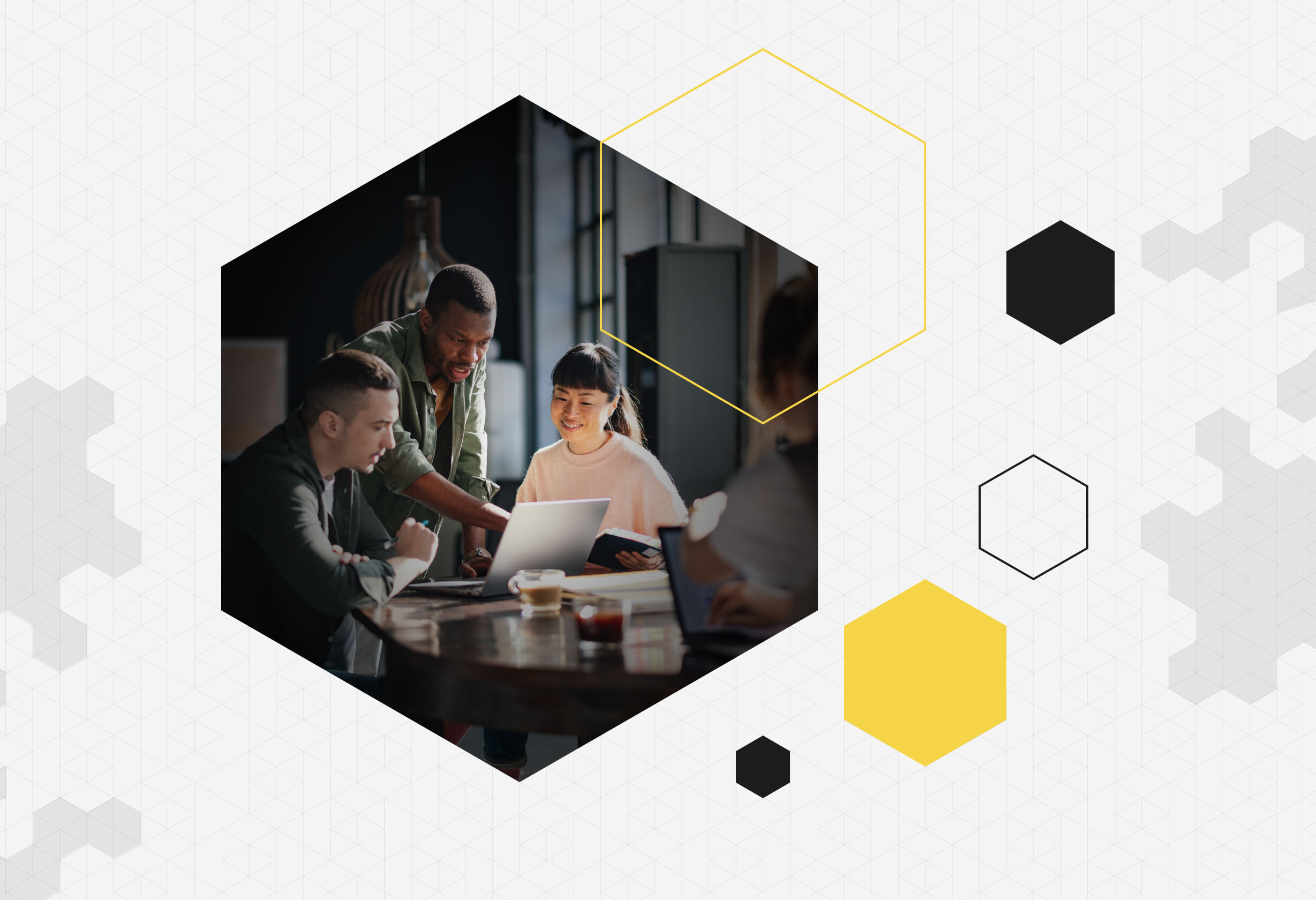
How design thinking can help drive business
The design thinking process introduces key principles that guide a team into finding results orientated solutions. Firstly, the methodology focuses on real needs of users of a product. Secondly the design thinking process challenges assumptions and includes different perspectives into the ideation phase. Different voices lead to better ideation, innovation, and solutions. Another important aspect of design thinking is that after framing a problem accurately, the proposed solutions are tested and iterated on real user groups using tangible prototypes.
Features of a human-centered approach
Unlike other approaches, the design thinking methodology has the users as an integral and central part of the process. Design thinking is a human centered approach with a key emphasis on empathy. It is through the process of empathizing with real users that teams can understand the user needs in detail i.e., who they are and what they need. Unlike a data led approach, some techniques to empathize with users include user interviews, contextual inquiry, and empathy maps.
Narrows down any risks
Through design thinking, you are ensured that a problem is clearly framed. More importantly, being on a linear process, there is a feedback loop with real users. Feedback for a potential solution is received through the prototyping and testing stage of the process. The design thinking process ensures iteration and innovation based on real user feedback.
Guarantees results
The design thinking approach is comprehensive and guarantees a result. This is because of a thorough process and an iteration model. At the ‘empathy’ stage, teams gain an intimate insight into the people they are designing for. At the ‘define’ stage a clear problem statement is defined. When at the ‘ideate’ stage, teams employ techniques to generate creative solutions to the problem. Next, the team get to the ‘prototype’ stage where a tangible representation of the solution is actualized. Finally, in ‘test’ stages the prototype is validated against the target audience.
Through this process, a team has a user centered approach to finding creative solutions. A proposed solution is further validated against real users, enabling teams to understand how they interact with a product, what problem they face and how they feel. By iterating and testing the solution via multiple prototypes a product is guaranteed success.
How to use design thinking to level up your current website
By embracing design thinking to challenge your current website (or any digital product), you ensure that the website will focus on the needs of your actual users. Employing the design thinking framework gives you the tools to frame problems correctly and follow a streamlined path to tangible solutions that are validated with real users. The benefits of using design thinking include enhanced innovation, improved customer acquisition, customer loyalty and a better return on your investment.
Start thinking like your users
Using empathy and a human centered approach ensures we understand any problems experienced by users from their perspective. Product designers immerse into the context of the problem and observe and engage with the target audience. Some techniques used to empathize with users include user interviews, contextual inquiry, user personas and empathy maps.
Developing empathy in the design process, helps the design team to understand the emotions of end users. These insights can be used to identify areas of opportunity and development.
Challenge the current design
After developing empathy in your design rationale, you need to analyze and define issues and problems with your current website. You now evaluate your current website design by using tools such as user personas, usability heuristics, data analytics, heat maps, survey data and user flow analysis.
Having identified problems that prevent meeting your user needs, the team can focus on ideation and proposing potential solutions. This is a creative process where functional and appealing design ideas can be proposed. The proposed solutions should always be user centric. A key feature of design thinking is to include different people from diverse backgrounds to generate more innovative ideas and concepts.
Prototype, test, and experiment
The design team can now enter an exploratory phase where the list of ideas from the previous stages can be narrowed down and actualized into tangible prototypes. In context, the design team can prototype key sections of the current website into a working model for testing.
The prototypes are then presented to actual users to gather suggestions, get valuable feedback and other insights. As design thinking is a non-linear approach, the design team can revisit the process time to time and refine the prototypes to a much closer final solution.
Looking to improve your current website?
At Thin Martian, design thinking is integral to our process for solving or creating new digital products. Our website design and development teams have a comprehensive and structured methodology to ensure we improve your current website’s user experience, make it more customer focused and result orientated product.
Through empathy and a human centered approach, we identify your user’s key needs. We then ideate potential solutions using insights (workshops, discussions, and brainstorming, user personas, user journey mapping, user interviews and competitive analysis). Our professional web design team then narrows down the solutions and creates tangible prototypes to test with real users. These insights help us to improve your website iteratively, ensuring a creative, user led and validated solution.
From empathy, ideating, prototyping, and testing, there is little room left for uncertainty in our innovative solutions. With a feedback loop from real users, Thin Martian go through the whole design thinking process iteratively. We pledge an improvement on your current website for a guaranteed result.